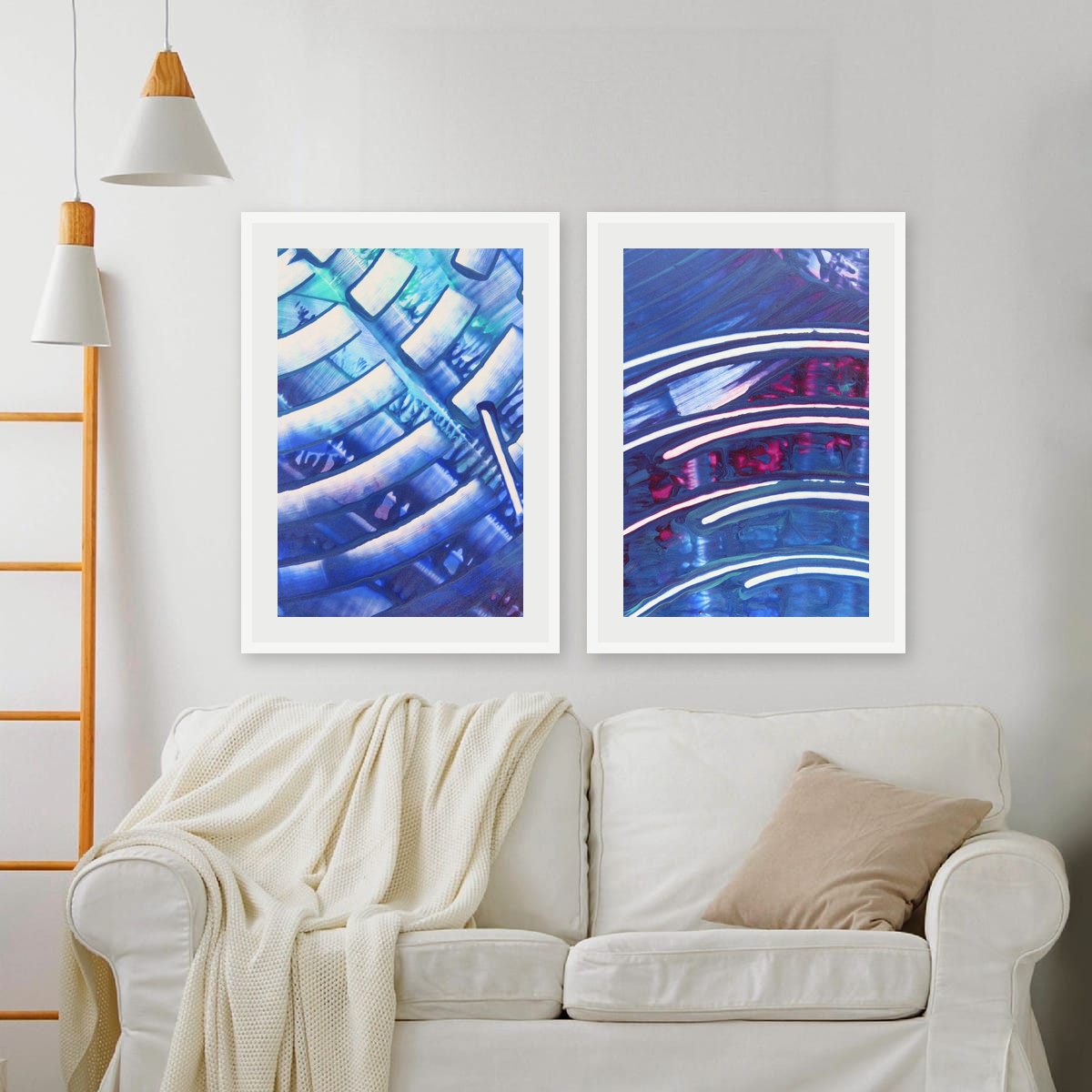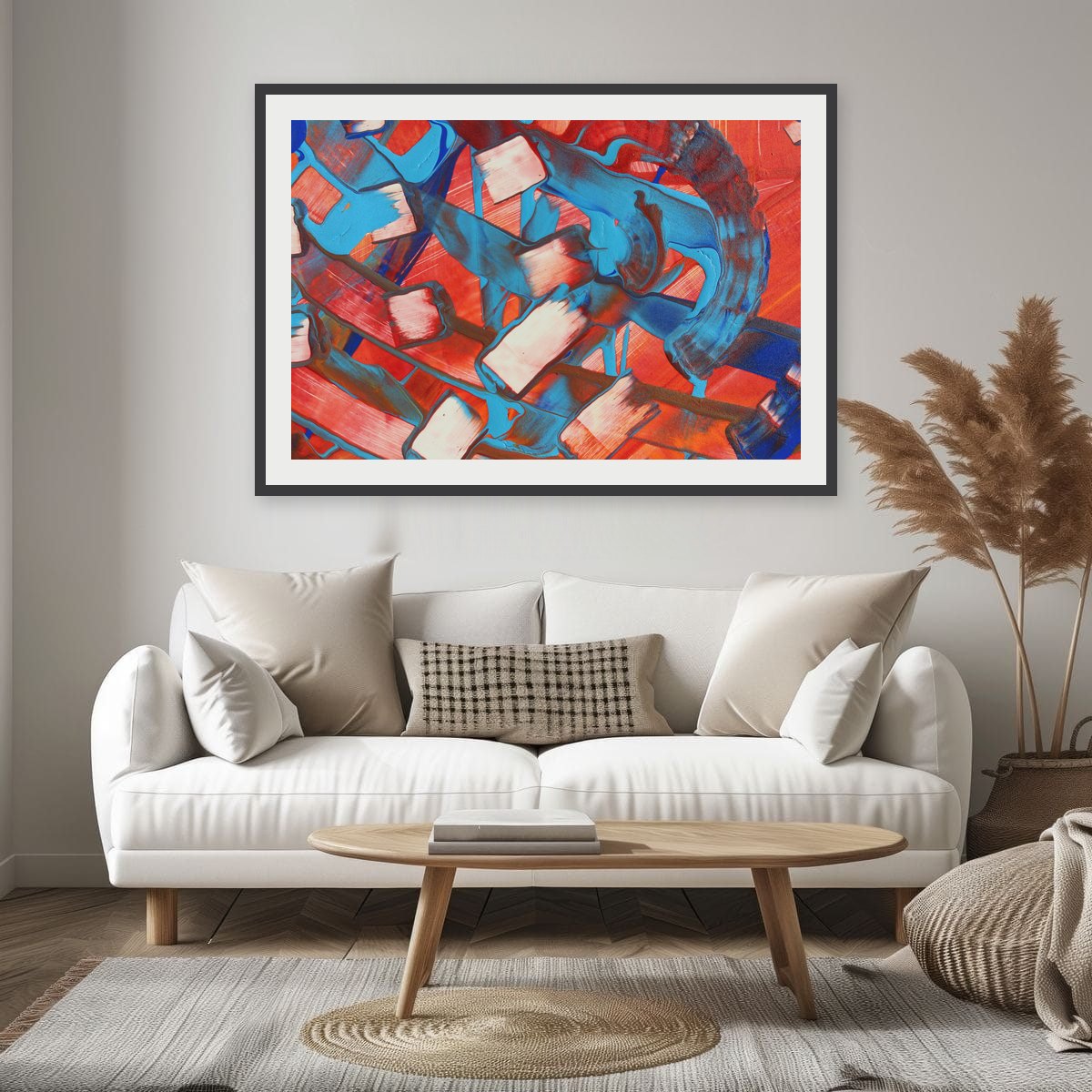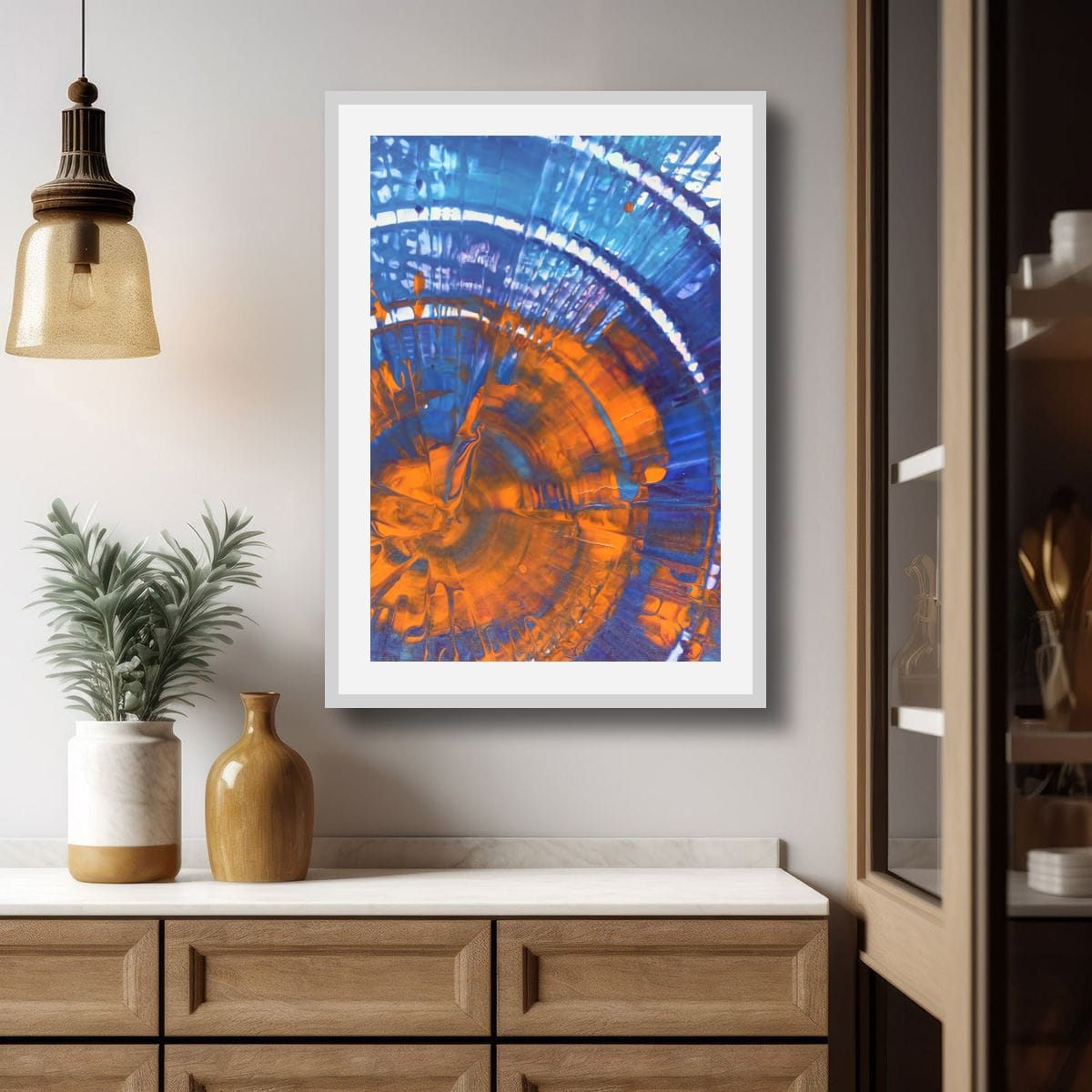
The short answer
Above an entryway console, choose art that is two thirds to three quarters of the console's width and hang it 6 to 10 inches (15 to 25 cm) above the top. In a hallway without furniture, hang art so its center sits about 57 to 60 inches (145 to 152 cm) from the floor, and keep every piece along the hall on that same center line.
Above an entryway console
An entry console is usually narrow and fairly tall, which makes vertical art a natural fit. The art should be clearly narrower than the console, so a lamp, a bowl for keys or a plant can sit beside it without crowding.
A tall vertical print above a console makes a narrow entry feel taller. A horizontal one makes it feel wider. If your entry is small, think about which of those you need more.
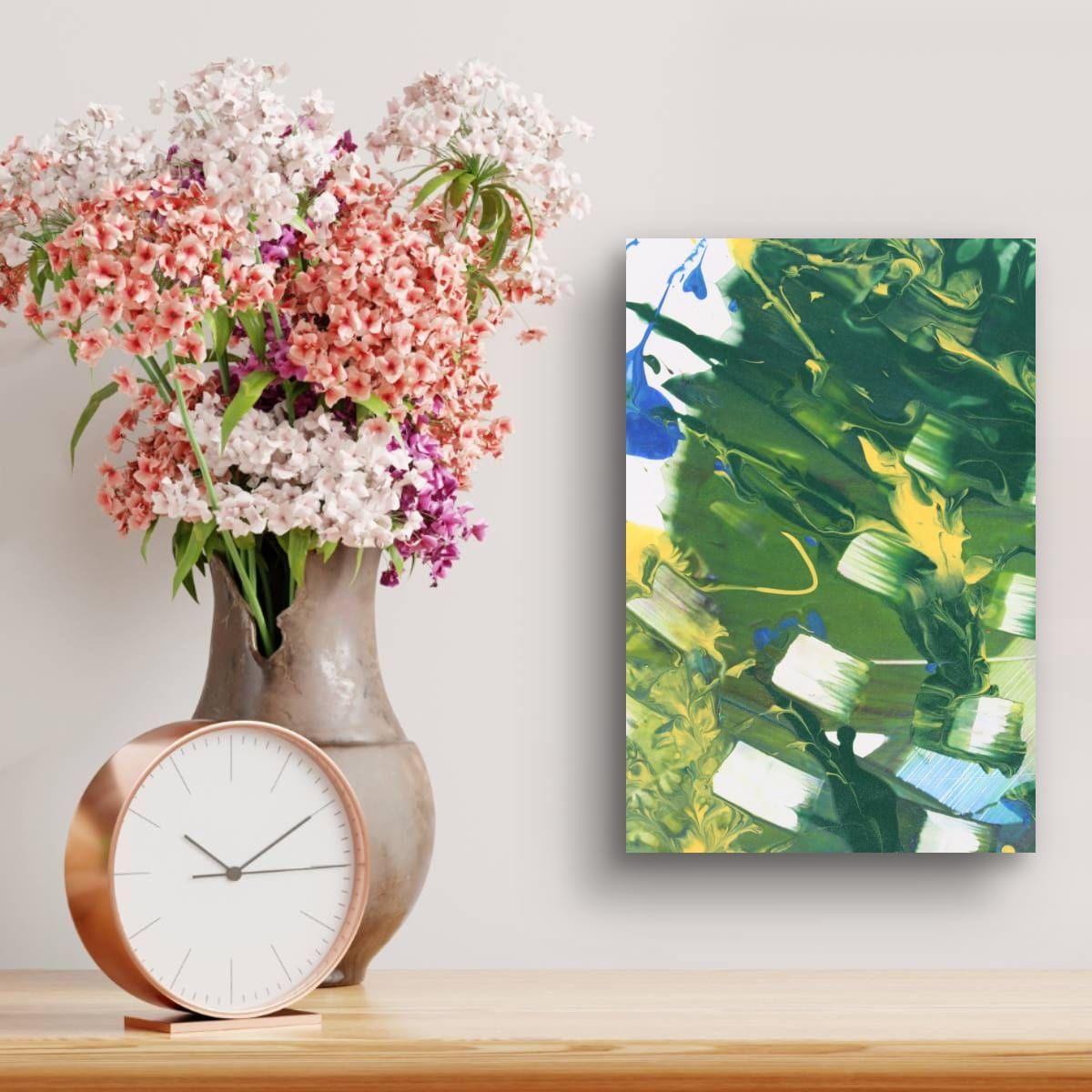
Narrow hallways
In a hallway you never see the art from across the room. You see it from three or four feet away, often while walking. That has two consequences:
- Smaller pieces work. A size that would look lost above a sofa can feel just right in a corridor.
- Detail matters. Close viewing rewards art with texture and surface, which is exactly what painting detail prints are about. Hallways are one of my favorite places for them.
Keep frames slim in tight corridors so nothing sticks out to be bumped by shoulders or bags, and choose formats that do not mind an occasional touch.
Hanging a series along a hallway
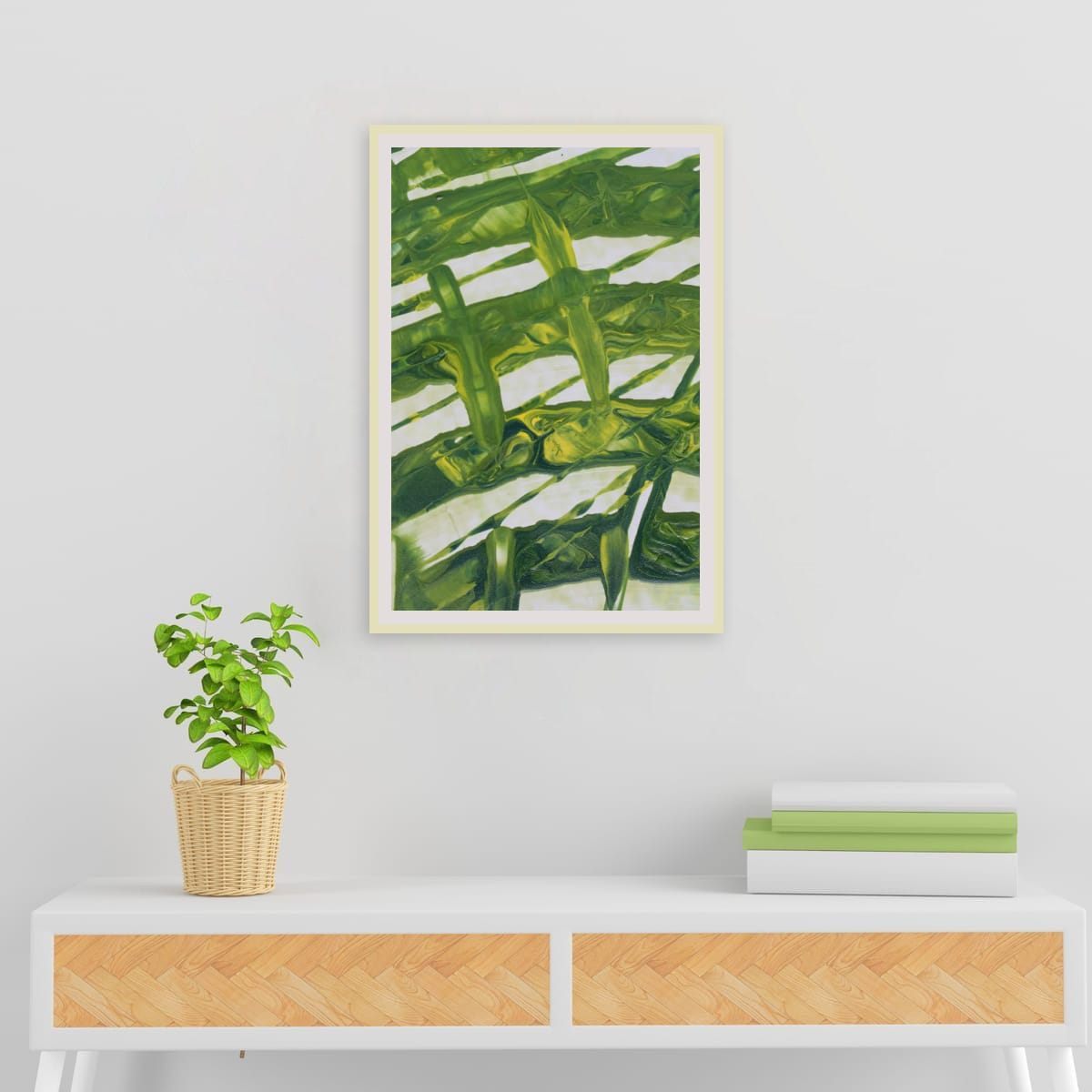
A long hallway can hold a sequence: three, four or more prints spaced along the wall. What makes a series look professional is not the art itself but consistency.
- One center line. Hang every piece so its center sits at the same height, even if the sizes vary.
- Equal spacing. Decide on a gap and repeat it exactly. In a hallway, gaps can be wider than in a tight pair, anywhere from about 6 to 18 inches (15 to 45 cm) depending on the length of the wall.
- A shared thread. Same frames, same palette, or details from the same painting. Something has to tell the eye that these pieces belong together.
Where not to hang
Avoid the spots where art will be hit or hidden: right behind a door that swings open, directly above light switches, or where coats on hooks will cover it. Also check the light. Entryways often get strong sun from a glass door or a window, and direct sunlight fades any print over time.
Stairways
Stairs are hallways that climb, and they follow the same idea: one consistent line. Instead of a horizontal center line, hang art along a line that runs parallel to the slope of the stairs, keeping each piece at roughly the same height above the step in front of it. Frames should step up together with the stairs, with equal spacing between them. Mark the positions on paper templates first, because measuring on a slope is easy to get wrong.
Keep pieces near stairs light and securely fixed, and away from where hands reach for the railing or the wall.
Art or mirror?
Entryways often get a mirror, and for good reason: a last look before leaving, and more light in a small space. If you have room for only one, think about what the space needs. A mirror opens and brightens; art gives the entry personality and color. In a wider entry you can have both, a mirror above the console and art on the facing or adjacent wall, where it is the first thing you see when the door opens.
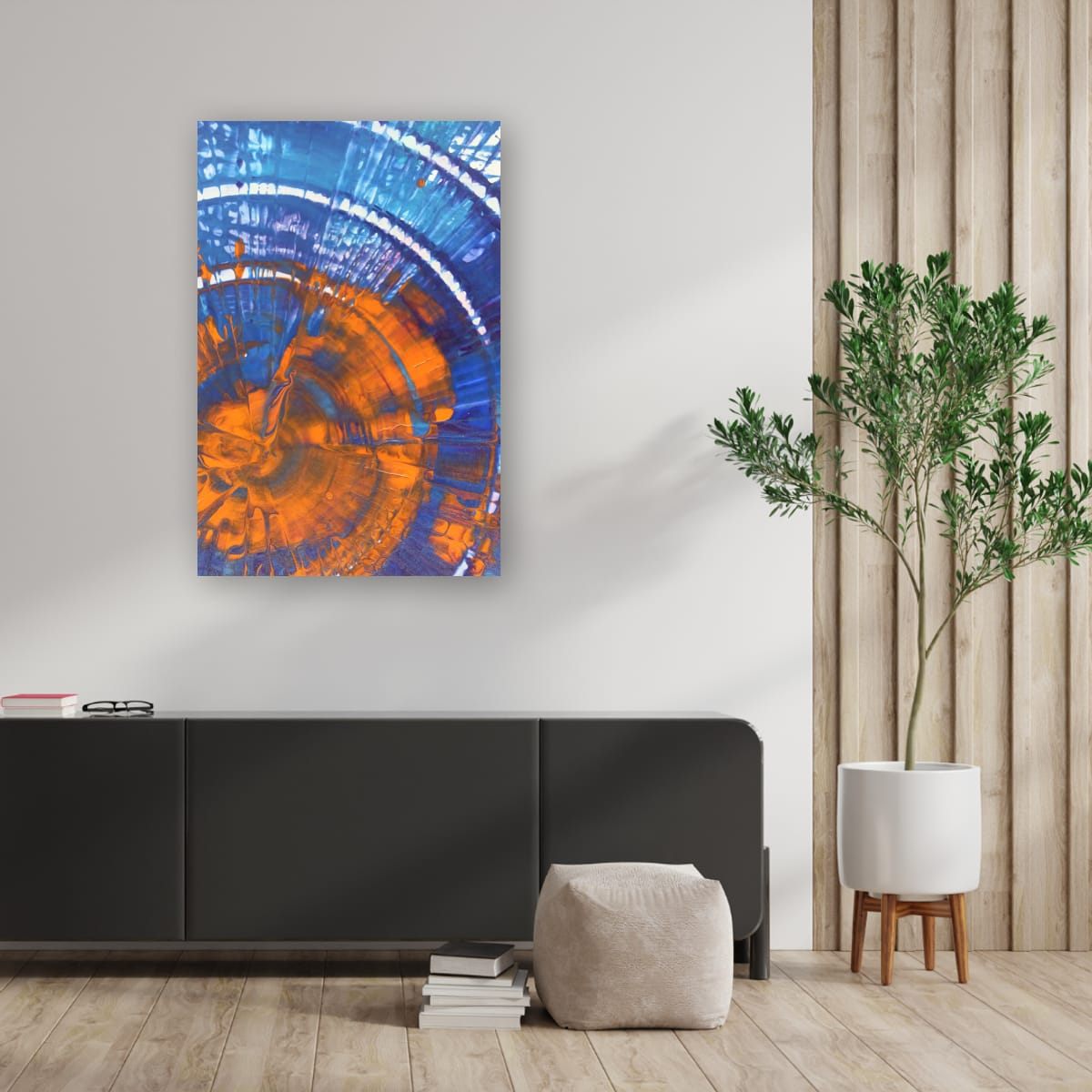
Long, low cabinets
Many entries and living spaces have a long, low cabinet rather than a tall console. The same proportions apply: about three quarters of the cabinet's width, 6 to 10 inches above it. With a very long cabinet, a pair or a row of three verticals often looks better than one huge piece.
Checklist
- Above a console: 2/3 to 3/4 of its width, 6–10″ above it.
- In hallways: centers at about 57–60″ from the floor.
- For a series: one center line, equal gaps, one shared thread.
- Slim frames where people pass close.
- Keep art out of door swings and direct sun.
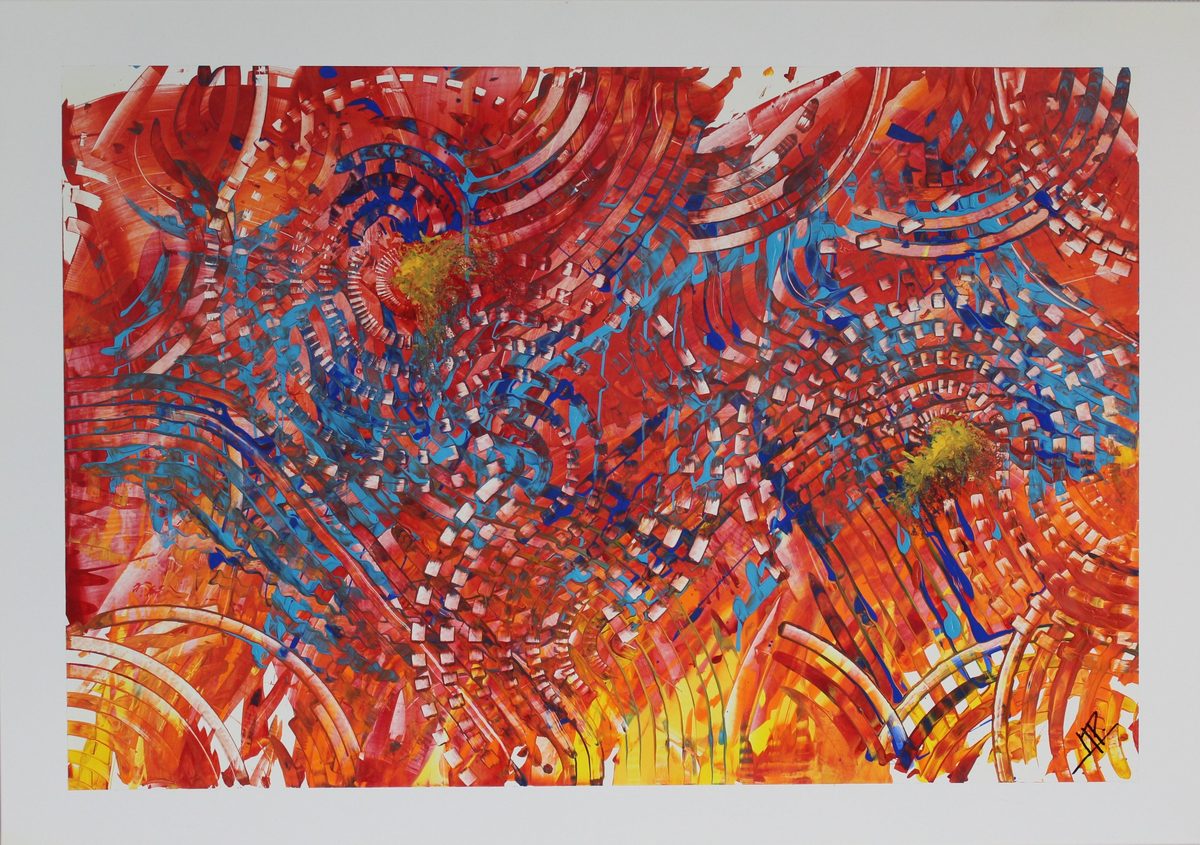
These are general guidelines, not strict rules. Every room is different, and a few inches either way will not ruin a good wall. Room scenes are digital mockups; the artworks are details of real hand-painted paintings. Prints are offered in several sizes and formats on the shops linked from each artwork page.